
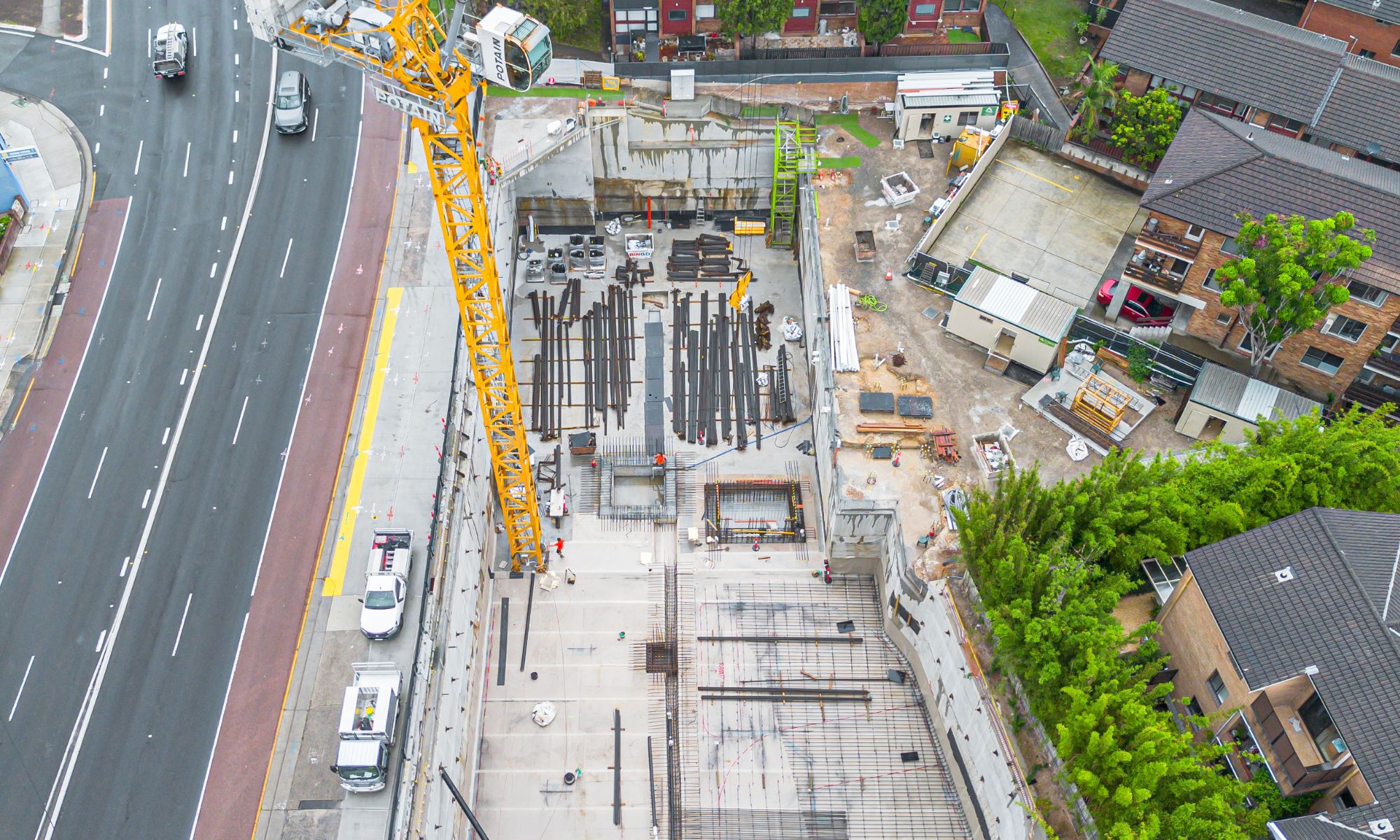
Australia’s construction industry is no stranger to code updates, but NCC 2025 carries a change that will have genuine, practical consequences for anyone involved in below-ground construction — certifiers, designers, builders, and product suppliers alike. For the first time, a single Performance Requirement — F1P1 — will govern all water management for Class 2–9 buildings, both above and below ground. The mechanism that makes this work is deceptively simple: a new defined term, “water”, in Schedule 1.

Why this is a structural shift, not a minor amendment
Under NCC 2022, the regulation of water affecting buildings was fragmented across five separate Performance Requirements spread across Parts F1 and F3. Below-ground structures — basements, retaining walls, lift pits, service pits — occupied an ambiguous position. Hydrostatic pressure from groundwater, for example, was not clearly captured by any single clause.
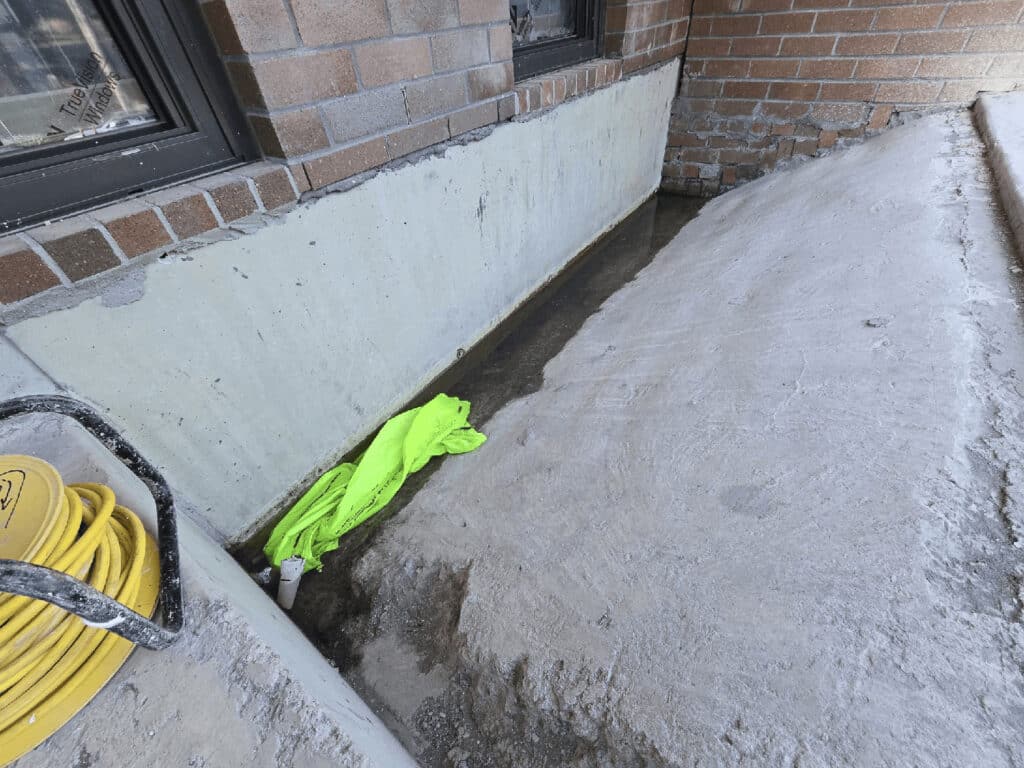
NCC 2025 resolves this by consolidating everything into F1P1 and anchoring it to a defined term that leaves no ambiguity. The Schedule 1 definition of “water” now includes surface water, sub-surface water, rainwater, stormwater, rising damp, water services overflow, and surface water seepage. Every italicised instance of Water in F1P1 carries the full weight of all seven types.
“For a basement, this means sub-surface water, surface water seepage, hydrostatic pressure, and rising damp will all have to be managed — and compliance must be demonstrated through a Performance Solution.”
No DtS pathway. Performance Solutions only.
This is the critical practical consequence. The Deemed-to-Satisfy provisions in Part F1 (F1D1 through F1D15) cover stormwater drainage, damp-proof courses, vapour barriers, and above-ground membranes referencing AS 4654.2. None of them address below-ground waterproofing. There is no equivalent Australian Standard for basement walls, below-ground slabs, or substructures exposed to sub-surface water.
This was true under NCC 2022, and it remains true under NCC 2025. What changes is that the obligation is now unambiguous. Every below-ground waterproofing project will require a bespoke Performance Solution demonstrating compliance with F1P1, typically developed with reference to BS 8102:2022, the British Standard widely used in Australian practice as a framework for water management grades and protection types.
The Class 7 and 8 exemption is gone
Under NCC 2022, F1P2, F1P4, and F3P1 each contained a clause allowing Class 7 or 8 buildings to avoid compliance “where in the particular case there is no necessity.” This was frequently misread as a blanket exemption — and was used to justify the omission of waterproofing in basement car parks, storage areas, and plant rooms.
NCC 2025 removes this limitation entirely. Basement car parks, below-ground storage, and plant rooms in mixed-use buildings must now all demonstrate compliance with F1P1 for all relevant water types. There are no carve-outs.
What the industry needs to do now
Certifiers must recognise that F1P1 is now the relevant clause for below-ground waterproofing, that there is no DtS pathway, and that Performance Solutions are mandatory — not optional. Designers and waterproofing consultants must document their below-ground systems as Performance Solutions, addressing the full range of water types in the Schedule 1 definition. Builders must treat below-ground waterproofing as a non-discretionary scope item with clear inspection and hold points. And suppliers must provide robust evidence of suitability for below-ground conditions, including hydrostatic pressure resistance and long-term durability under permanent immersion.
The absence of a referenced Australian Standard for below-ground waterproofing is a long-standing gap that NCC 2025 will bring into sharper relief. Building industry awareness and capability before the code takes effect is not a nice-to-have — it is an urgent priority.
Every basement is different. At Waterproofing Integrity, our structural engineers and waterproofing specialists assess each project on its own merits — design, intended use, location, and site-specific conditions — to recommend the right solution for your build with confidence.
Contact Waterproofing Integrity on 1300 025 944 or advice@waterproofingintegrity.com.au
Unlock Expert Insights
Read the white paper to understand the new compliance requirements for below-ground structures and the practical implications for certifiers, designers, builders, and material suppliers.
Comments (0)