
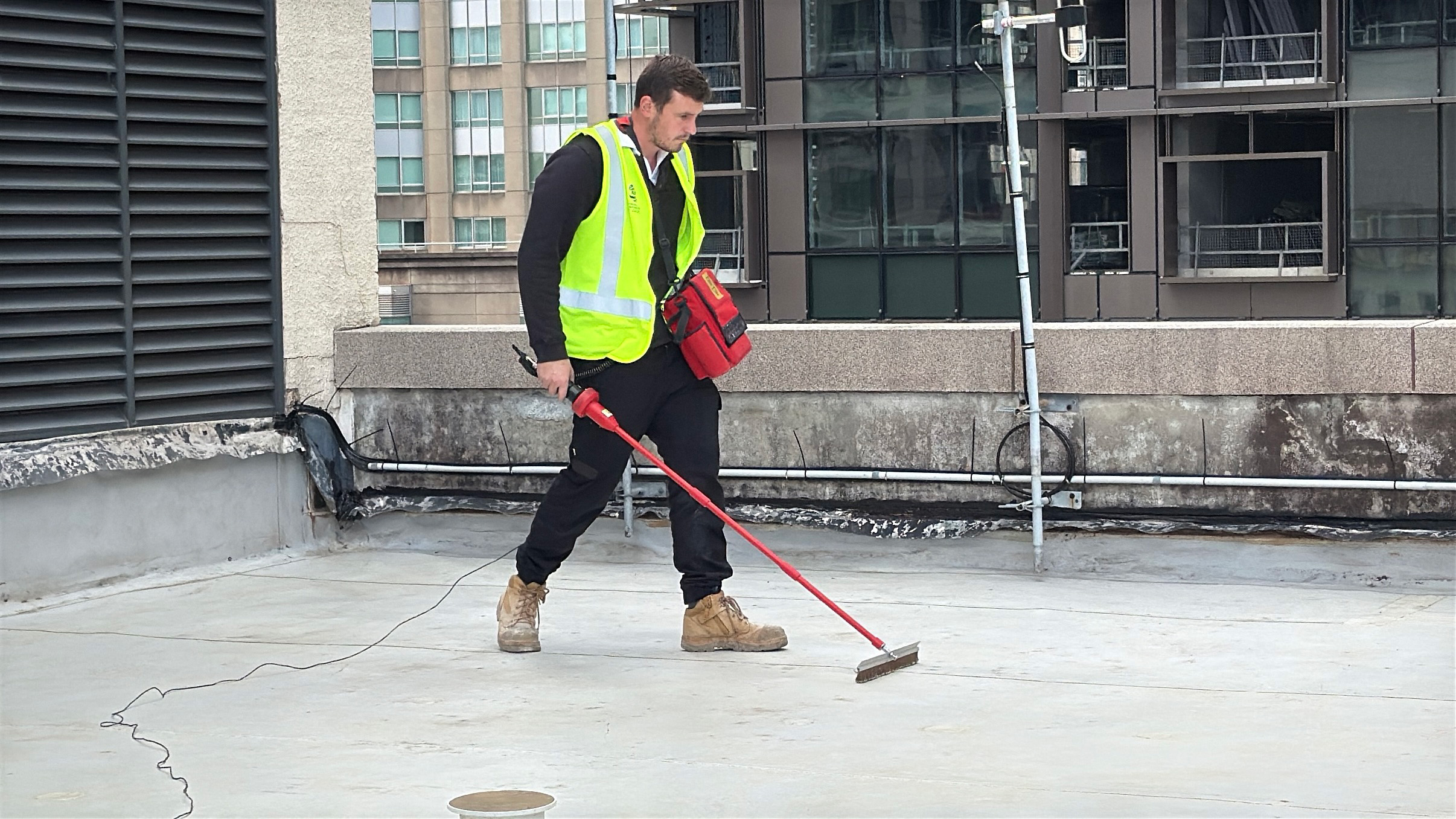
Electronic leak detection (ELD) locates breaches in an exposed membrane without water, using electrical current. Flood testing ponds water and waits for it to appear through defects. ELD is faster, more precise and works on vertical surfaces. Flood testing is appropriate when standards require it or when a membrane type is not compatible with ELD. For most new construction, dry ELD is the preferred method.
Why Membrane Integrity Testing Matters Before Finishes Are Installed
Once tiles, ballast, topping screed or landscaping are installed over a waterproofing membrane, access to the membrane is gone. If water starts tracking through later, the investigation and remediation costs multiply — because you are no longer removing a single finish layer but potentially a complete build out.
Membrane integrity testing done before finishes are placed takes 30 minutes to two hours on most projects. Remediation after defects have tracked through occupied space can take weeks and cost orders of magnitude more.
Why is Electronic Leak Detection (ELD) superior to water testing? ELD identifies the precise location of a breach rather than just confirming one exists. It is significantly faster than flood testing, works on dry membranes without needing to introduce water, and can be performed on vertical surfaces including shower walls and retaining walls. Flood testing confirms whether water passes through a membrane but does not locate the breach — leaving the installer to probe or open areas to find it.
Dry Electronic Leak Detection ELD (High Voltage)
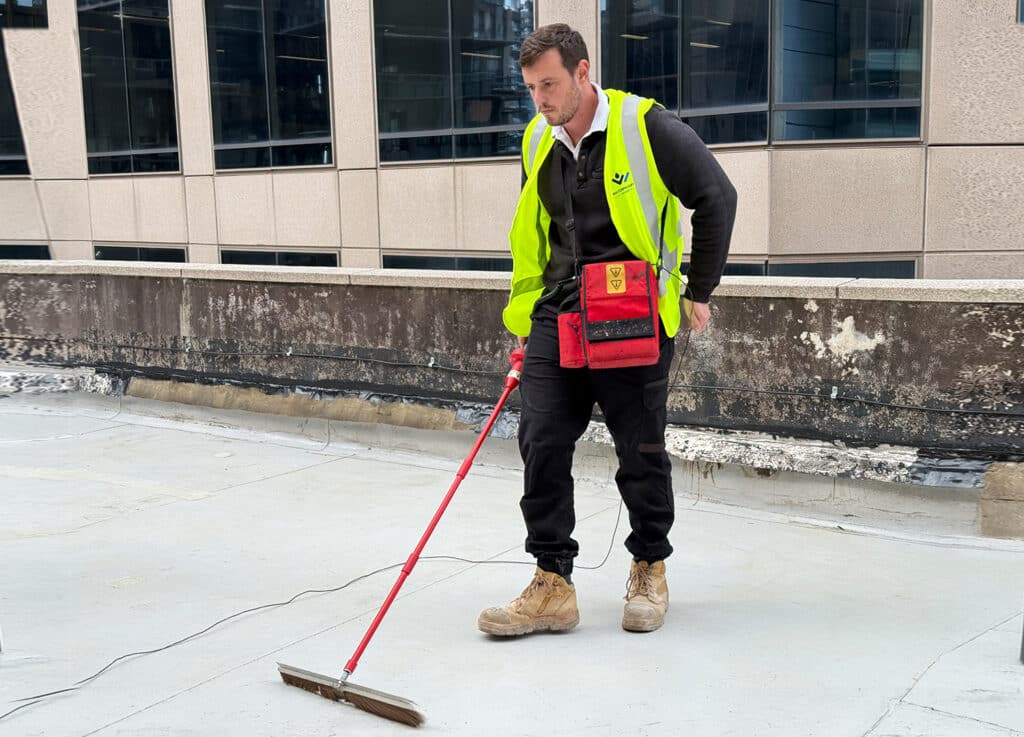
A high-voltage DC signal is applied across an exposed, dry membrane. Any breach creates a pathway to ground, triggering an alert. The technician maps the exact breach location on a plan. Carried out under ASTM D7877. Best suited to: flat and low-pitch rooftops, podium decks, planter boxes, retaining walls, shower walls and basement membranes.
Vector Mapping (Low Voltage)

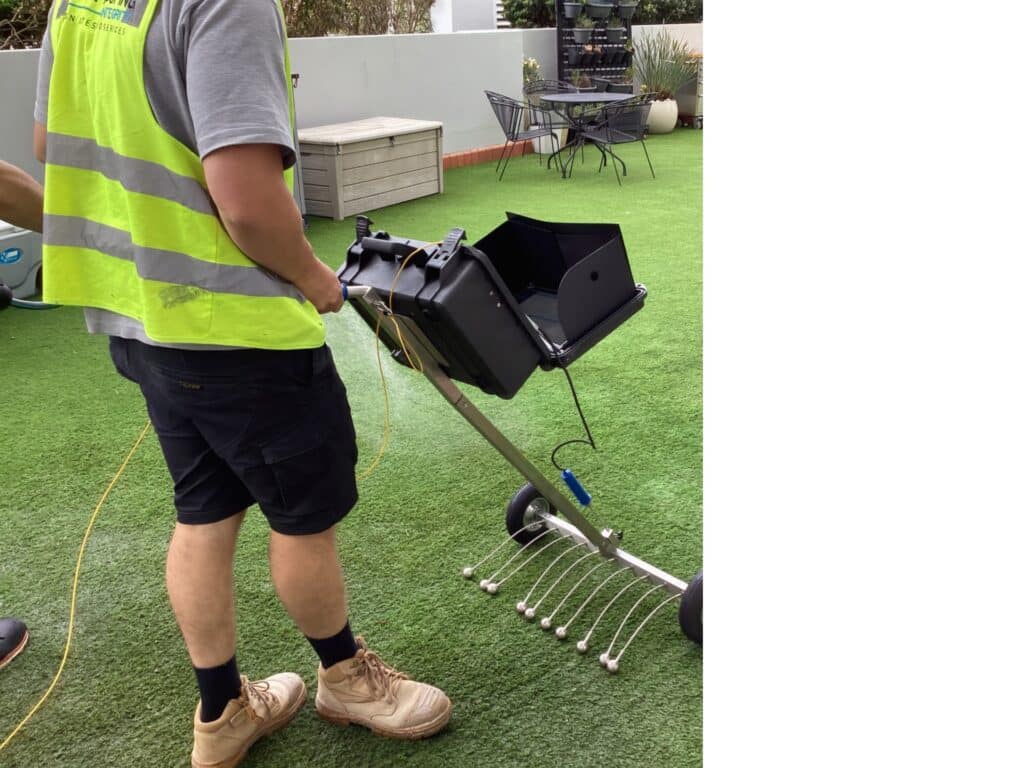
A small volume of water is introduced over the surface. Low-voltage current is applied. Water entering through membrane breaches completes an electrical circuit, and a reference probe traces the signal back to the breach location. Used on membranes already under tiles, pavers or other overburden. Best suited to: balconies and podiums where tiles are already down, occupied strata buildings, existing rooftops with insulation already in place.
Electromagnetic Scanning
An electromagnetic transmitter passes over the surface, and a receiver detects anomalies in the signal caused by moisture presence. Does not locate the membrane breach directly — instead maps moisture distribution beneath the surface to guide investigation. Best suited to: large rooftop areas with insulation where moisture mapping is needed before removing material, or sites where the breach location is genuinely unknown.
Controlled Flood Testing
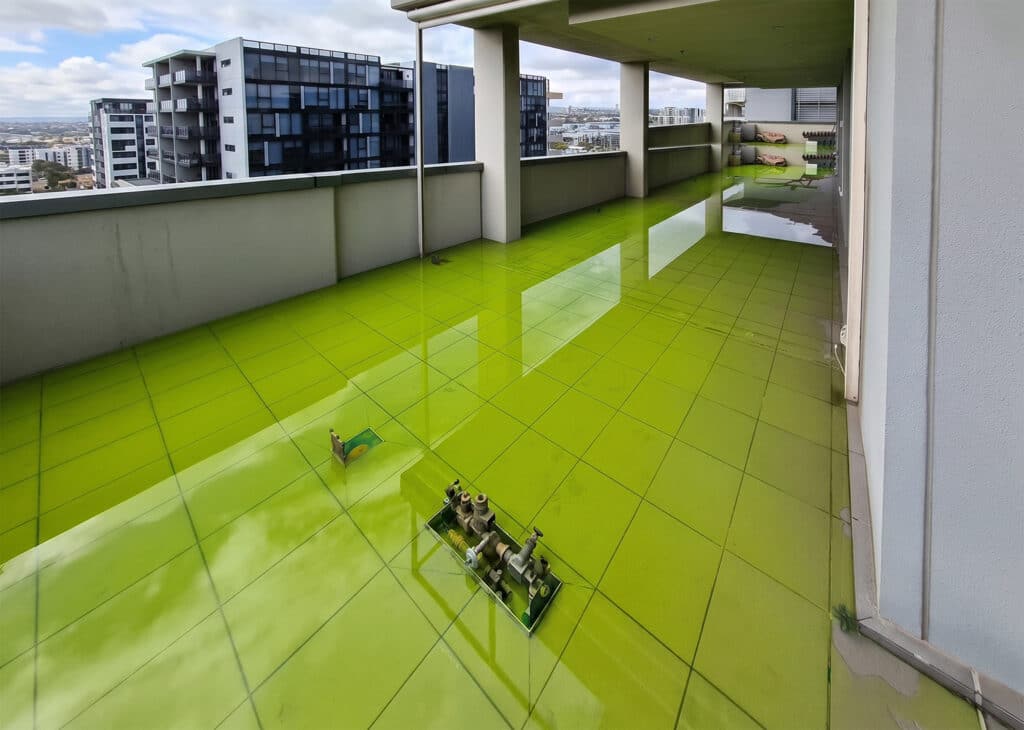
Water is ponded on the membrane to a specified depth for a specified duration (typically 24 hours for waterproof roofing). The area below is monitored for appearance of water. Carried out under ASTM D5957. Best suited to: situations where the standard requires a flood test, membrane types or configurations not compatible with ELD, and situations where the client requires the traditional compliance verification method.
Vacuum Bell Testing
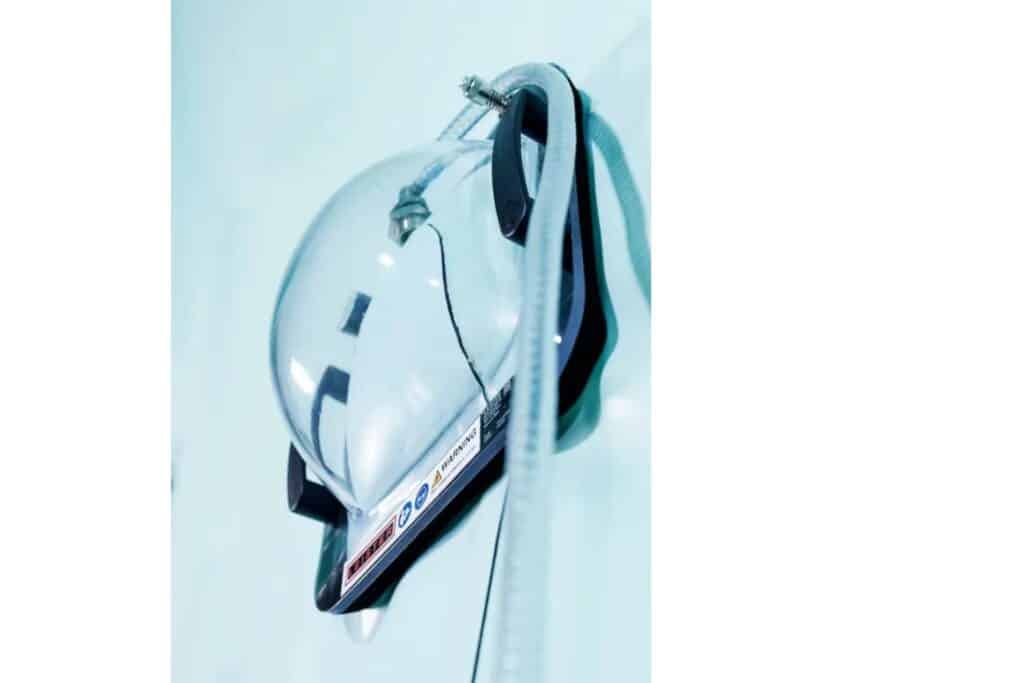
A transparent dome is placed over a membrane seam or detail. A vacuum is drawn beneath the dome. Any seam breach becomes visible through the dome. Used to verify the integrity of individual welds and joints in sheet membranes, PVC waterstops and critical details. Best suited to: sheet membrane seams, PVC waterstop welds, roof penetration details and critical junctions before overburden.
Comparison: Which Test for Which Application?
| Application | Dry ELD | Vector Map | EM Scan | Flood | Vacuum Bell |
| Roof — exposed membrane | ✓ Preferred | – | Supplementary | If required | Details only |
| Podium — exposed membrane | ✓ Preferred | – | – | If required | Seams |
| Balcony — tiles already down | – | ✓ Preferred | Supplementary | – | – |
| Shower — vertical surface | ✓ Preferred | – | – | – | – |
| Planter box | ✓ Preferred | – | – | If required | – |
| Basement wall/slab | ✓ Preferred | – | – | – | – |
| Sheet membrane seams | Supplementary | – | – | – | ✓ Preferred |
| Moisture mapping — existing asset | – | – | ✓ Preferred | – | – |
When to Combine Methods
On large or complex projects, combining methods provides the most comprehensive result. ELD on the flat membrane, vacuum bell on seams and penetrations, and moisture mapping after finishes are placed — together these form a defensible testing record across all risk areas.
Need proof before handover? Book a membrane integrity test before tiles, ballast, landscaping or final finishes go down.
✉️ advice@waterproofingintegrity.com.au
🌐 waterproofingintegrity.com.au
📍 Our offices across Australia: Sydney | Newcastle | Melbourne | Brisbane

Comments (0)