
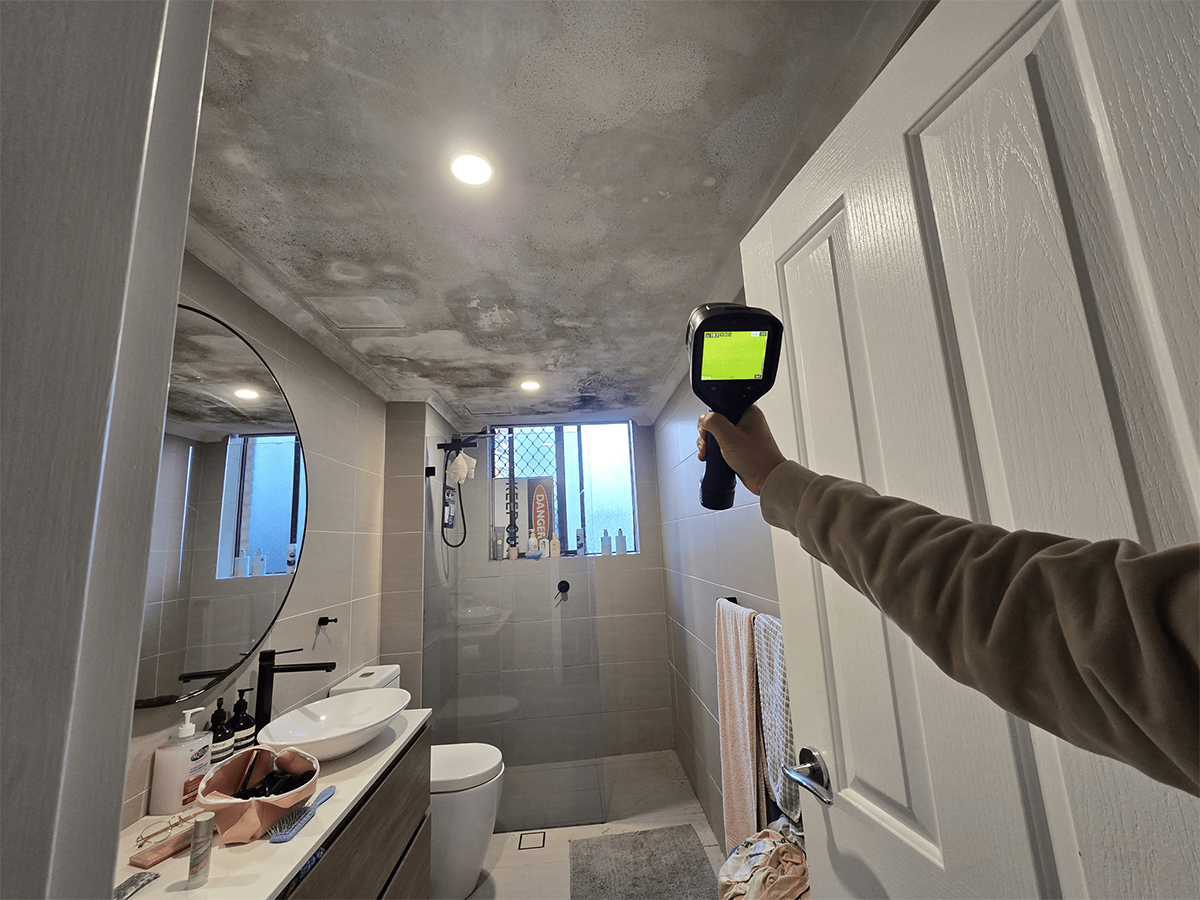
Waterproofing remains one of the biggest building defect challenges facing NSW strata communities.
The 2025 Strata Defects Research Report from Building Commission NSW provides an important snapshot of serious building defects in residential apartment buildings across NSW.
The research found that 53% of surveyed buildings reported one or more serious defects, with waterproofing identified as the most prevalent serious defect category.
For strata managers, owners corporations and building professionals, the finding reinforces an important point:
Identifying a waterproofing defect is only the beginning. Understanding why it is happening is what determines what should happen next.
What does the 2025 NSW Strata Defects Report cover?
The 2025 research is the third biannual survey conducted by Building Commission NSW into serious defects in NSW strata communities.
The research involved 520 completed surveys and focused on Class 2 residential apartment buildings four storeys and above, with strata schemes registered between July 2018 and June 2024.
This is an important context. The findings should not be interpreted as representing every building in NSW or every commercial property. They provide specific insight into the experience of NSW strata communities dealing with serious defects.
Waterproofing was the most prevalent serious defect
The Building Commission NSW research identified waterproofing as the most prevalent serious defect category.
For strata managers, this raises a practical question:
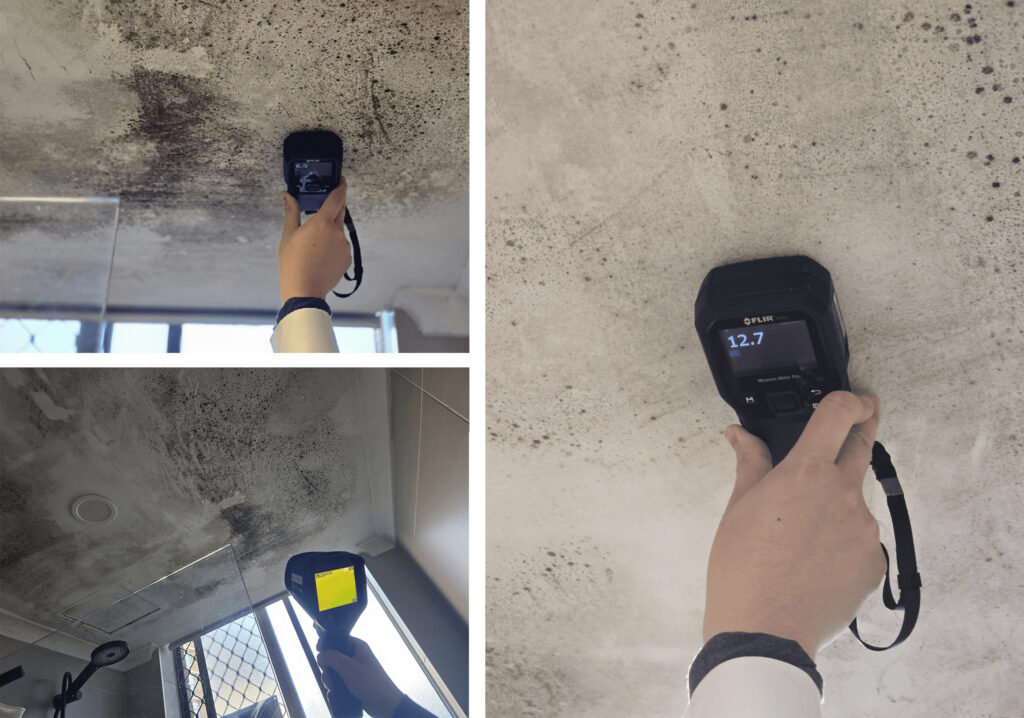
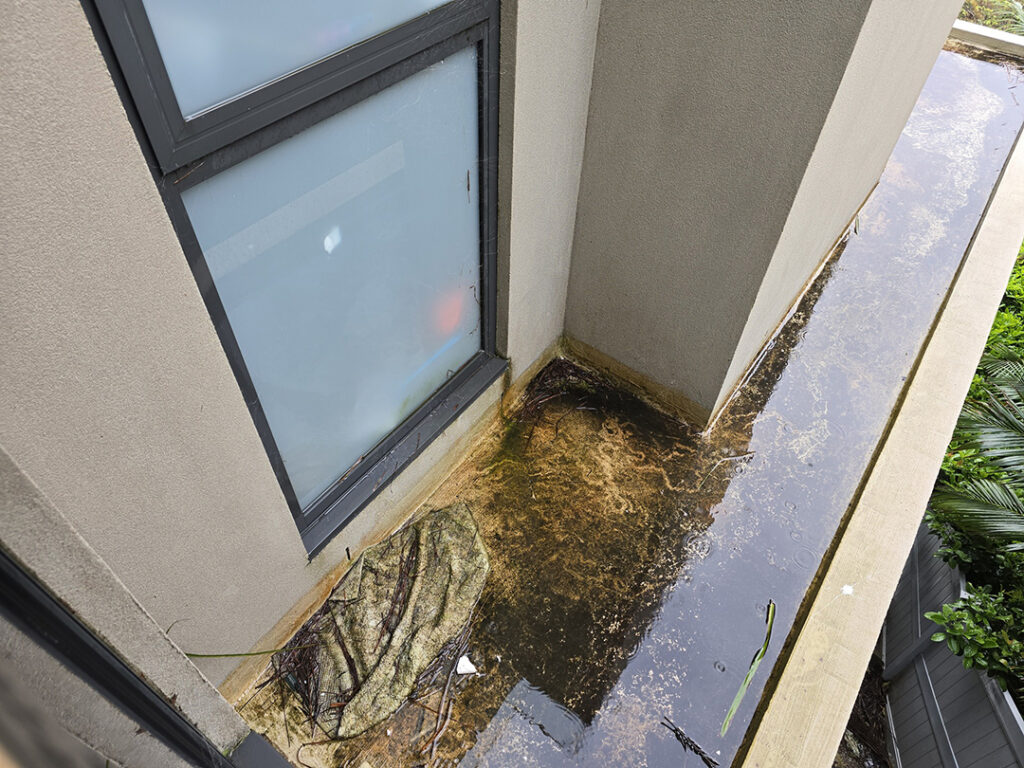
When water ingress is reported, how do you determine whether the problem is actually a failed membrane, poor detailing, drainage, substrate conditions, a junction, penetration or another source?
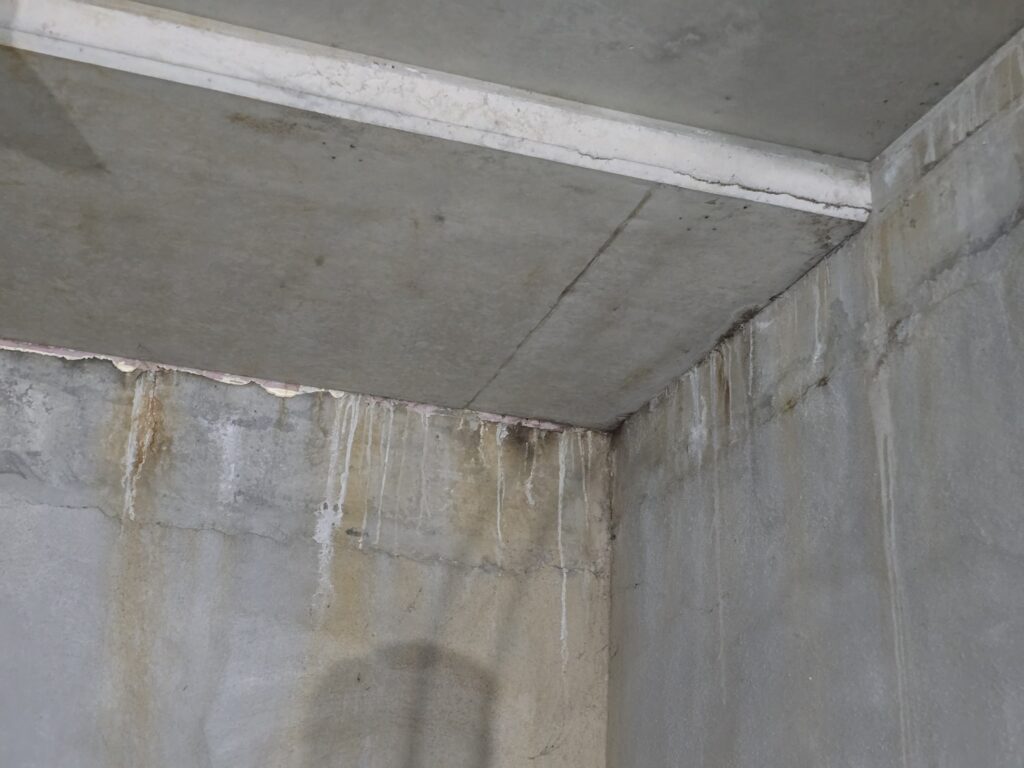
A visible water stain does not necessarily identify the source of the water.
Why water ingress needs investigation before repair
One of the most common mistakes with waterproofing defects is moving directly from:
Leak → Contractor → Repair
without establishing:
Leak → Investigation → Diagnosis → Scope → Repair → Verification
Without a proper investigation, a repair may address the visible symptom without addressing the source.
This can result in recurring water ingress, additional repair costs, disruption to occupants and uncertainty about whether the original defect has actually been resolved.
What should a strata manager do when waterproofing fails?
Structured investigation should establish:
1. Where is water appearing?
2. When does it occur?
3. What areas are exposed to water?
4. What waterproofing systems and details are present?
5. What potential pathways could allow water ingress?
6. What testing is appropriate?
7. What evidence supports the diagnosis?
8. What remediation is actually required?
9. How will the completed work be verified?
This creates a much stronger technical record than simply obtaining a repair quotation.
The importance of independent technical advice
The 2025 research also identifies challenges associated with dealing with serious defects, including the need for appropriate technical and professional advice.
For strata communities, independence can be particularly valuable when different parties have competing interests or when the cause of a defect is disputed.
An independent waterproofing consultant can investigate the building condition without being the party responsible for carrying out the remedial work.
What this means for strata managers
The key lesson is not simply that waterproofing defects exist.
It is that the quality of the investigation can influence every decision that follows.
A properly documented waterproofing investigation can help a strata manager and owners corporation understand:
• what is wrong
• where the problem originates
• what evidence supports the diagnosis
• what testing has been undertaken
• what remediation is required
• how the remediation should be verified.
Final takeaway
The 2025 NSW Strata Defects Research reinforces the importance of taking waterproofing defects seriously.
But identifying a defect is not the same as diagnosing it.
When a building has a waterproofing problem, start with the investigation, not the repair.
Source
https://www.nsw.gov.au/sites/default/files/noindex/2026-04/strata-defects-research-report-2025.pdf
✉️ advice@waterproofingintegrity.com.au
🌐 waterproofingintegrity.com.au
📍 Our offices across Australia: Sydney | Newcastle | Melbourne | Brisbane
How We’re Different From a Waterproofing Contractor
| Waterproofing Integrity | Waterproofing Contractor | |
|---|---|---|
| Diagnoses the cause | Independent testing before any recommendation | Often assumes, based on the job being priced |
| Recommends the fix | Specifies what’s correct, regardless of who installs it | Recommends what they install |
| Financial interest in the outcome | Advisory fee only | Paid to perform the work |
| Verifies the finished work | Independently tests and reports on the completed work | Self-verifies their own work |
Comments (0)