
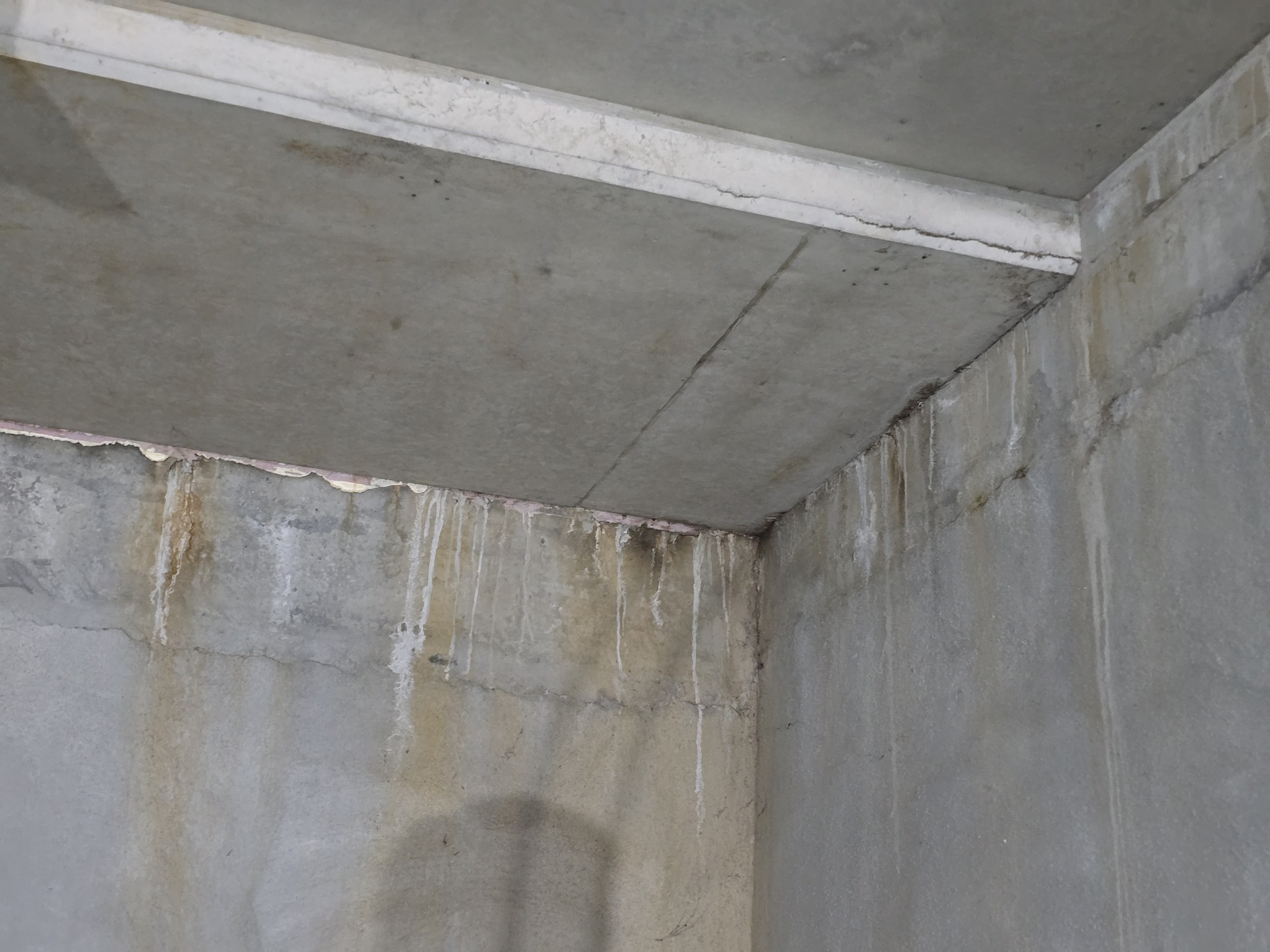
Waterproofing remains a recurring source of defective work complaints in Queensland. The Queensland Building and Construction Commission (QBCC) says waterproofing consistently ranks among the top ten most common defective work complaints in its Industry Snapshot. It also reports that each residential bathroom claim finalised under the Queensland Home Warranty Scheme in 2024–25 averaged almost $25,000 in rectification costs. That figure concerns those finalised residential bathroom claims, not apartment, body corporate or commercial repairs.
For a body corporate or commercial asset owner, the practical question is how to establish the cause of water ingress before committing to remediation.
What issues has the QBCC identified?
Based on its inspections, the QBCC lists frequent issues including incorrect membrane application, unsealed tap fixtures, waterstop placement and termination, and junctions that have not been reinforced. These are investigation prompts, not a diagnosis of any particular building.
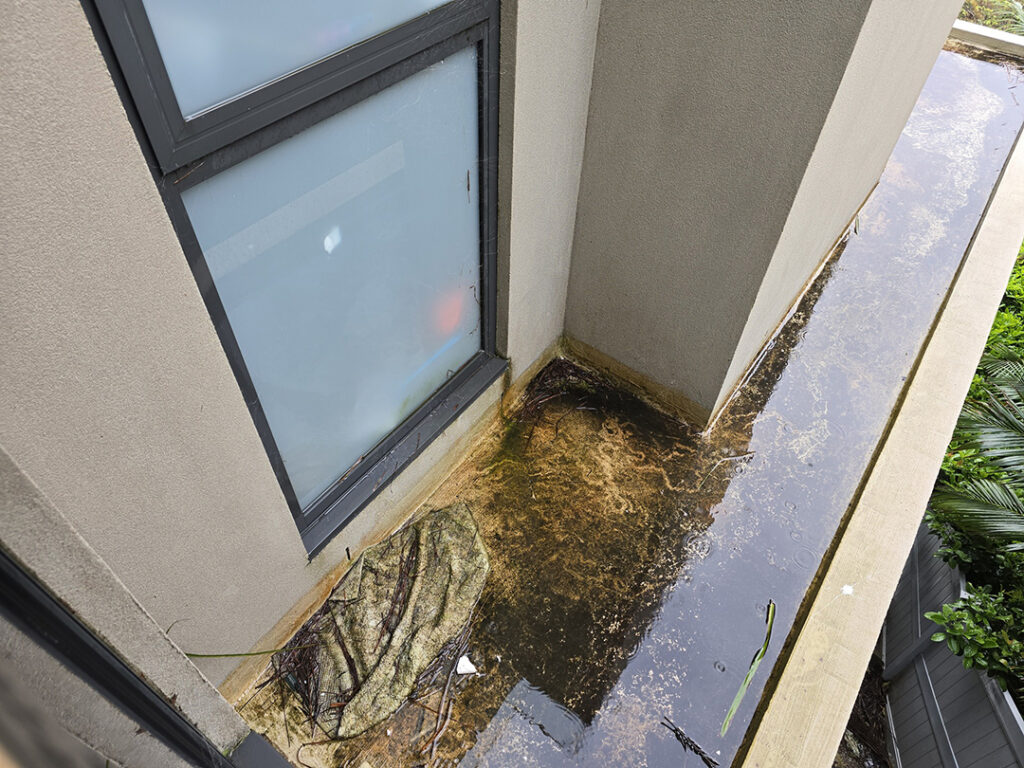
In an existing building, water might also move through a balcony threshold, drainage outlet, penetration, joint or other interface. The place where staining appears may differ from the point where water enters.
What should a Queensland body corporate do first?
1. Record what is happening
Keep dated photographs and notes showing where water appears, when it occurs, weather or use conditions, affected lots or common property, and previous repairs. The QBCC advises early documentation when a potential defect is noticed.
2. Establish the property and maintenance context
In a community titles scheme, use body corporate, lots and common property. Maintenance responsibility can depend on the survey plan, lot boundaries and regulation module. A leak affecting one lot does not by itself identify the entry point or who must pay.
3. Investigate cause and extent
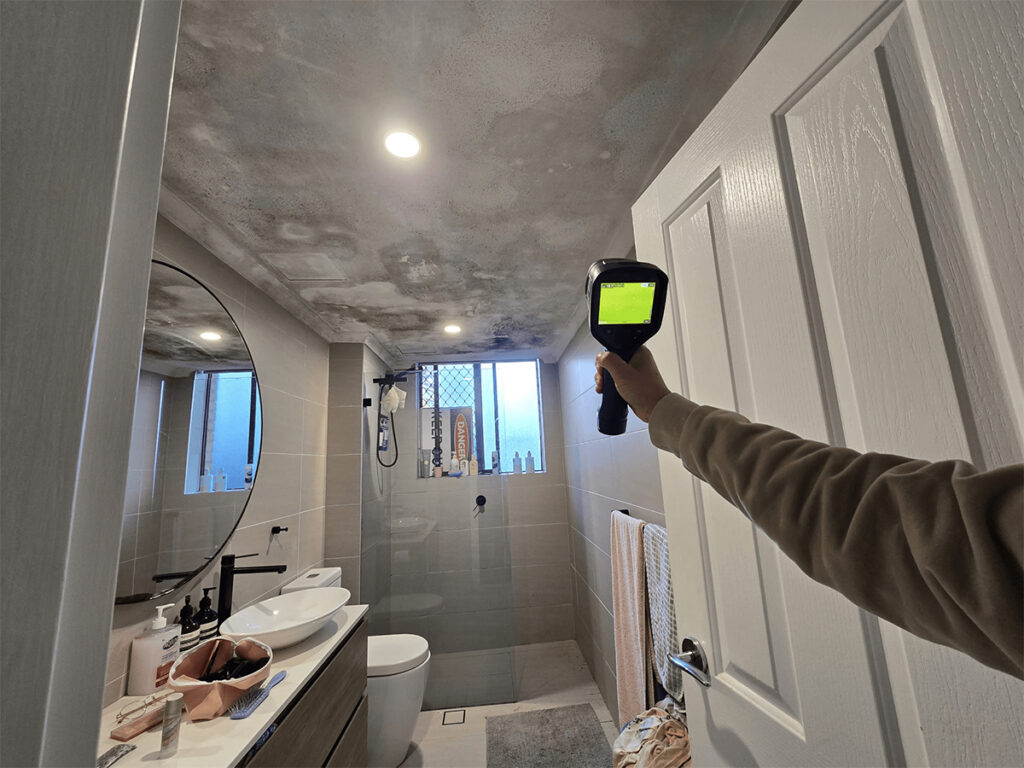
Review drawings, building history, past reports and repair records. Inspect relevant waterproofing, drainage and construction details. Select tests to answer specific questions about membrane continuity, joints or substrate moisture. Separate observations, results and technical conclusions.
4. Develop a scope builders can price
Once likely cause and extent are understood, set out preparation, substrate conditions, waterproofing details, interfaces, inspection points and completion criteria. A defined scope lets the team compare quotations against the same technical requirements.
5. Check the completed work
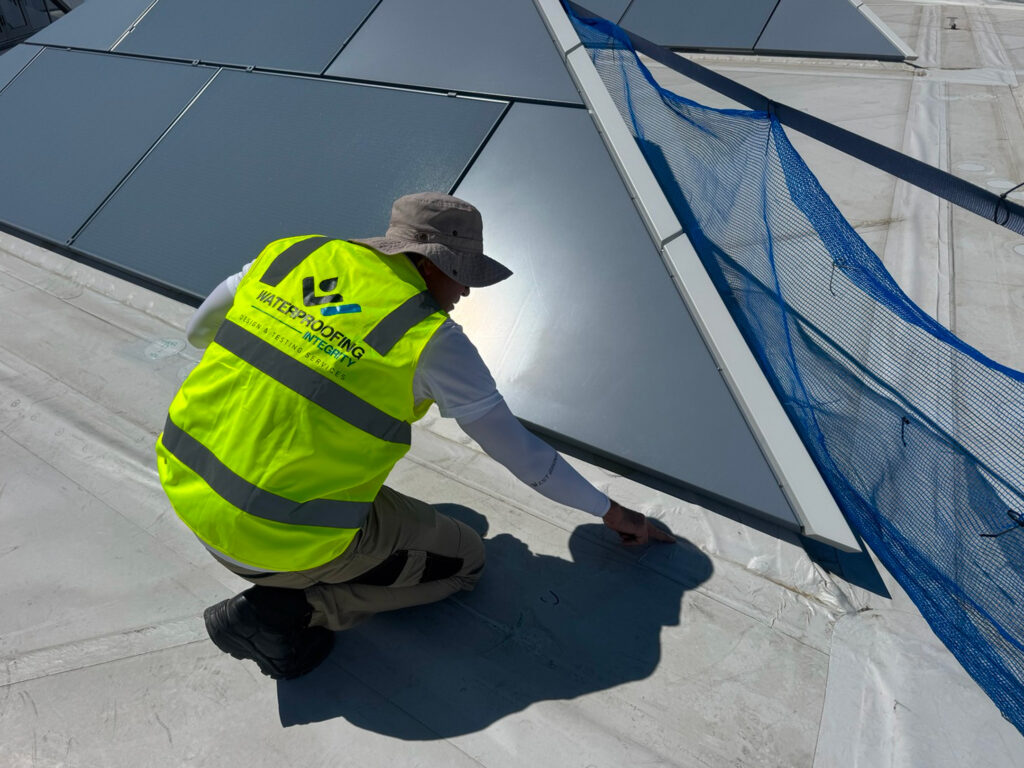
Plan verification before remediation starts. Depending on the project, this may include staged inspections, photographs and suitable testing to document whether specified work was delivered.
What if the matter involves a QBCC defective work complaint?
Technical investigation and the formal complaint process serve different purposes. For a common property complaint, QBCC lists supporting documents including written notice to the contractor and scheme documents. Check current eligibility and process for the particular matter. An independent report may clarify building condition; it does not determine a complaint or insurance outcome.
The lesson for Queensland buildings
QBCC insights show that waterproofing defects deserve early attention. Decisions about a particular building must rest on its own evidence. Replacing visible material without establishing the water pathway can leave the underlying issue in place.
Document the symptoms. Investigate the cause. Scope the remediation. Verify the work.
Waterproofing Integrity provides independent investigation, testing and remedial advice in Queensland. If your body corporate or commercial building faces recurring water ingress, contact our Brisbane team at https://waterproofingintegrity.com.au/contact/ to discuss an evidence-based assessment.
Primary Source
QBCC Waterproofing done right: https://www.qbcc.qld.gov.au/news/waterproofing-done-right-what-you-need-know-2025
QBCC Industry Snapshot waterproofing: https://www.qbcc.qld.gov.au/news/industry-snapshot-top-10-defects-home-owner-series-waterproofing
Queensland Government body corporate maintenance: https://www.qld.gov.au/housing/body-corporate/maintenance/responsibilities
QBCC defective work complaint: https://www.qbcc.qld.gov.au/complaints-disputes/building-work-issue/defective-work-dispute/lodge-defective-work-complaint
✉️ advice@waterproofingintegrity.com.au
🌐 waterproofingintegrity.com.au
📍 Our offices across Australia: Sydney | Newcastle | Melbourne | Brisbane
How We’re Different From a Waterproofing Contractor
| Waterproofing Integrity | Waterproofing Contractor | |
|---|---|---|
| Diagnoses the cause | Independent testing before any recommendation | Often assumes, based on the job being priced |
| Recommends the fix | Specifies what’s correct, regardless of who installs it | Recommends what they install |
| Financial interest in the outcome | Advisory fee only | Paid to perform the work |
| Verifies the finished work | Independently tests and reports on the completed work | Self-verifies their own work |
Comments (0)