
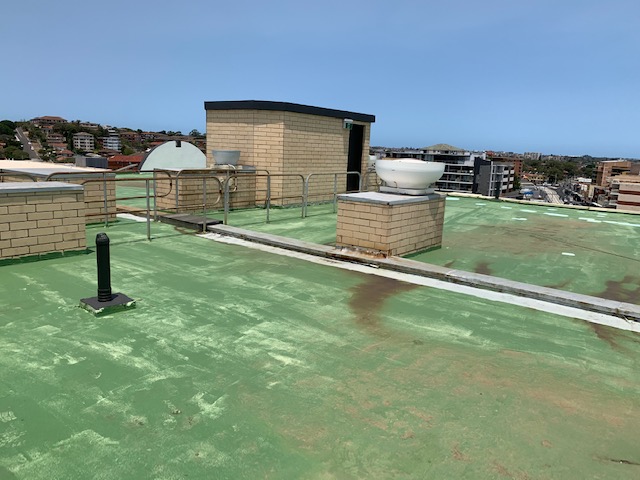
$283,000 is a number that gets attention. It should.
In the 2023 NSW Strata Defects Survey, owners corporations with access to cost data reported average accumulated costs of $283,000 per building as a result of serious defects in common property.
Waterproofing was the most prevalent serious defect category in the same research, found in 42% of the surveyed buildings.
Those two figures are connected, but they are not the same statistic. The $283,000 was the average cost of all serious defects reported by the affected buildings, not a waterproofing-only repair bill.
Read together, the numbers make the real point: water risk deserves attention before the membrane is buried, the building is occupied and every repair requires access through finished work.
The short answer: what does a waterproofing failure cost?
There is no reliable flat rate.
The cost of waterproofing defects is rarely limited to patching the membrane. It is shaped by where the failure sits, how late it is found and what the project must remove, protect, prove and reinstate to reach it.
A localised repair to an exposed membrane and the reinstatement of a roof, podium, facade or basement are completely different financial events. The final cost depends on where the failure sits, what covers it, how far water has travelled, whether occupied areas are affected and how much evidence is needed before anyone agrees on the cause.
The membrane repair can be the smallest part of the bill.
The full cost can include investigation, access, demolition, temporary protection, drying, replacement finishes, professional reports, legal advice, disruption, relocation, delay and retesting.
That is why the right comparison is rarely “the cost of testing versus the cost of the membrane”. It is the cost of testing while the work is accessible versus the cost of finding and fixing a concealed failure later.
What the Australian defect data actually says
Three findings give project teams a useful picture of the risk.
Waterproofing remains the leading serious defect category
The 2023 NSW Strata Defects Survey found that 53% of the surveyed residential apartment buildings had experienced serious defects in common property. Serious waterproofing defects were found in 42% of buildings, making waterproofing the most prevalent category.
The 2025 research recorded waterproofing defects in 22% of surveyed buildings. That was an encouraging reduction, but waterproofing was still the most prevalent serious defect category.
The surveys covered different building-registration periods and the 2025 research also included eligible self-managed schemes for the first time, so the percentages are not a controlled before-and-after comparison. They do show the direction of travel. Waterproofing remains the category project teams cannot afford to treat as a minor risk.
Serious defects create costs well beyond rectification
In the 2023 survey, buildings that could provide accumulated cost data reported $79 million in serious-defect costs. The average was $283,000 per affected building.
The cost split is revealing:
- 57% was associated with temporary and long-term rectification;
- 20% was spent on professional services such as technical statements;
- 15% was spent on legal costs; and
- the balance sat in other costs, including strata-management expenses.
Almost half the spend was outside the physical rectification work. Even before a matter becomes a formal dispute, the building can start paying to establish what happened, who is responsible and what should be done next.
Testing cannot remove every dispute. It can give the project team better evidence before memories fade, finishes cover the work and responsibility becomes harder to establish.
Waterproofing defects carry an economy-wide cost
The Australian Building Codes Board’s 2024 waterproofing impact analysis estimated the annual cost of waterproofing defects in new Class 2 residential buildings at between $235 million and $610 million.
For new Class 3 to 9 buildings, the estimated range was $829 million to $2.391 billion a year.
Class 2 generally covers apartment buildings. Classes 3 to 9 cover a broad range of accommodation, commercial, industrial and public buildings. The modelling included balconies and podiums, roofs and basements; it did not include internal wet areas in the economy-wide estimate.
These are modelled ranges, not invoices from one project. Their value is scale. Waterproofing failure is not an occasional inconvenience at the edge of construction. It is a recurring industry cost.
Where the repair bill grows
A membrane breach may be small. The route to reach it may not be.
Access
Before covering, a defect may be visible and reachable. After covering, the same area may sit below tiles, screed, pavers, ballast, landscaping, facade components or occupied finishes.
Every layer removed needs to be made safe, documented, demolished and reinstated. Access can cost more than the waterproofing repair itself.
Consequential damage
Water does not respect trade boundaries. It can affect ceilings, joinery, floor finishes, insulation, electrical systems, stored goods and occupied areas well away from the entry point.
The wet patch is evidence of a pathway, not proof of the source.
Delay and disruption
On a live project, a failed test can affect sequencing and handover. In an occupied building, investigation can mean isolating spaces, protecting occupants, working around operations and returning for multiple visits.
Hospitals, aged-care facilities, hotels, schools and commercial buildings carry disruption costs that do not appear in a membrane rate.
Evidence and disagreement
Once parties disagree, the job can require consultants, lawyers, insurers, expert reports and destructive openings. The 2023 NSW cost split shows how quickly these secondary costs become material.
The longer the defect remains unresolved, the more the project pays for uncertainty.
What the location of the failure does to the cost
The ABCB impact analysis included confidentially sourced defect and rectification data from 38 affected Class 2 and Class 7 buildings. In that sample, the average cost of rectifying waterproofing defects was around $1.7 million per affected building.
The location changed the cost sharply. The reported averages used different units and should be read carefully:
- $23,900 per balcony or podium defect;
- $23,700 per external-enclosure defect;
- $19,300 per internal wet-area defect;
- $655,000 per building with roof defects; and
- $1.5 million per building with basement or carpark defects.
The balcony, enclosure and wet-area figures are per defect location. The roof and basement figures are per affected building. They should not be added together or used as a price list. They show why “How much does a waterproofing defect cost?” is the wrong first question.
The better questions are: where is it, what sits above it, what sits below it, and when can it still be tested without pulling the building apart?
The cheapest testing window closes quickly
Testing can deliver its greatest commercial value when the work can still be inspected, repaired and retested without disturbing completed construction.
The ABCB analysis cited an indicative Western Australian case study comparing the cost of rectifying waterproofing in a six-square-metre bathroom. The estimate was $10,400 during construction and $15,000 after completion at five years or more, an increase of 44%.
That example relates to one bathroom in a single dwelling. On a podium, roof, basement or occupied commercial asset, the access and disruption multiplier can be much larger.
The testing windows are straightforward:
| Project stage | Question worth answering | Typical evidence pathway |
|---|---|---|
| Design | Are falls, drainage, movement, interfaces and terminations resolved? | Independent design review and testing plan |
| Before membrane installation | Is the substrate ready to receive the system? | Moisture, relative humidity, surface profile, strength and fall-gradient testing |
| After installation, before covering | Is the membrane continuous, bonded and installed to the required thickness? | Electronic leak detection, adhesion, thickness, seam or controlled flood testing as appropriate |
| Facade and enclosure completion | Are windows, sealants, penetrations and interfaces resisting water under the test conditions? | Facade spray testing, sealant adhesion and targeted investigation |
| Before handover | Is there a clear record of what was checked, where, against which criteria and with what result? | Coordinated inspection, test and close-out reports |
| After a leak appears | Where is water entering, and how is it travelling? | Diagnostic testing selected around the assembly and access conditions |
The final row can be the most expensive place to begin because access is harder and the evidence trail is weaker.
Illustrative scenario: the same breach, two very different bills
Consider a podium membrane with one small breach near a penetration.
At the pre-cover hold point, the membrane is exposed. The breach is located, marked, repaired and retested before pavers and landscaping go down. The repair is small and the evidence is captured while responsibility is clear.
Now move the same breach to six months after handover. Water appears in an occupied area below, but not directly beneath the entry point. The project may need consultants, moisture mapping, controlled testing, protection of occupied space, removal of pavers and landscaping, targeted opening-up, reinstatement and another round of testing.
The membrane repair may still be small. Access and uncertainty have become the job.
This is an illustrative composite based on common project conditions, not a published WI case study. It shows why timing changes the commercial exposure even when the physical defect has not changed.
Design and workmanship are usually connected
Waterproofing failures are often discussed as installer failures. The available data is less convenient than that.
In the ABCB sample of Class 2 and Class 7 defects, 83% of recorded waterproofing defect locations were attributed to a combination of design and workmanship. Design alone accounted for 5%, and workmanship alone accounted for 12%.
That does not mean every failure follows the same pattern. It means the project should stop treating design and installation as separate risk silos.
A sound detail can fail through poor sequencing or preparation. Good workmanship can still be defeated by unresolved drainage, movement, termination or interface design. Testing is most useful when it sits between those responsibilities and checks the built condition before the next layer hides it.
This is where independence matters. A party that does not design the product, sell the membrane or install the system can focus on the question the project needs answered.
Put waterproofing testing on the risk register
Testing should not appear as a late provisional item with no defined purpose. It should be tied to a failure mode and a decision.
For each waterproofing element, record:
- the failure being managed;
- the consequence if it reaches handover or occupation;
- the last practical point at which the work can be checked;
- the inspection or test method;
- the acceptance criteria and who sets them;
- who must respond if the result is outside the criterion; and
- what evidence closes the item, including any retest.
This changes the commercial question.
Instead of asking whether testing can be removed to save money, the team can ask what risk returns to the project if the test is removed.
What WI needs to scope a testing pathway
A useful testing brief does not start with the name of a device. It starts with the decision the project needs to make.
Send WI:
- drawings, waterproofing details and the specification;
- the membrane, coating and substrate information;
- the current project stage and the date access will change;
- photographs, known leaks and defect history;
- the proposed finishes or overburden;
- the acceptance criteria, ITP and warranty requirements; and
- the reporting, handover or dispute deadline.
WI can then recommend the method, site preparation, access requirements, reporting pathway and retest sequence. A test result is evidence under stated conditions. It is not a blanket guarantee that every part of the assembly will perform indefinitely.
Price the test against the risk it is meant to retire
There is no honest generic ratio between testing cost and repair cost. A useful comparison needs the actual project.
Start with the element, area, access, membrane or coating system, program, consequence of failure and reporting requirement. Then select the method that can answer the question at the right time.
Waterproofing Integrity is a NATA-accredited testing organisation (Accreditation No. 21463, Site No. 25832) providing independent testing across the waterproofing lifecycle. NATA accreditation applies to the activities listed on WI’s current published scope.
Send WI the project information and ask the team to price a testing pathway against the defect exposure it is intended to reduce. If the right method is not yet clear, start with WI’s waterproofing testing methods guide.
The cheap window to test does not stay open for long.
Frequently asked questions
What is the average cost of a waterproofing defect?
There is no reliable single average for an individual defect. Published figures use different units and building types. The cost depends on location, access, consequential damage, disruption, evidence requirements and how much completed work must be removed and reinstated.
When should waterproofing testing happen?
Plan the testing pathway during design and place the main integrity hold point after installation but before the membrane is covered. Substrate, adhesion, thickness, seam, integrity and facade checks belong at different stages.
Does a passed test guarantee the waterproofing system?
No. A test provides evidence about a defined area under stated conditions using a selected method. It does not replace sound design, correct installation, compatible materials, maintenance or the wider inspection and close-out process.
Is all WI testing NATA-accredited?
WI is a NATA-accredited testing organisation. Accreditation applies to the specific activities listed in the current NATA scope of accreditation. WI also provides broader specialist inspection and testing services outside that scope.
✉️ advice@waterproofingintegrity.com.au
🌐 waterproofingintegrity.com.au
📍 Our offices across Australia: Sydney | Newcastle | Melbourne | Brisbane
Comments (0)