
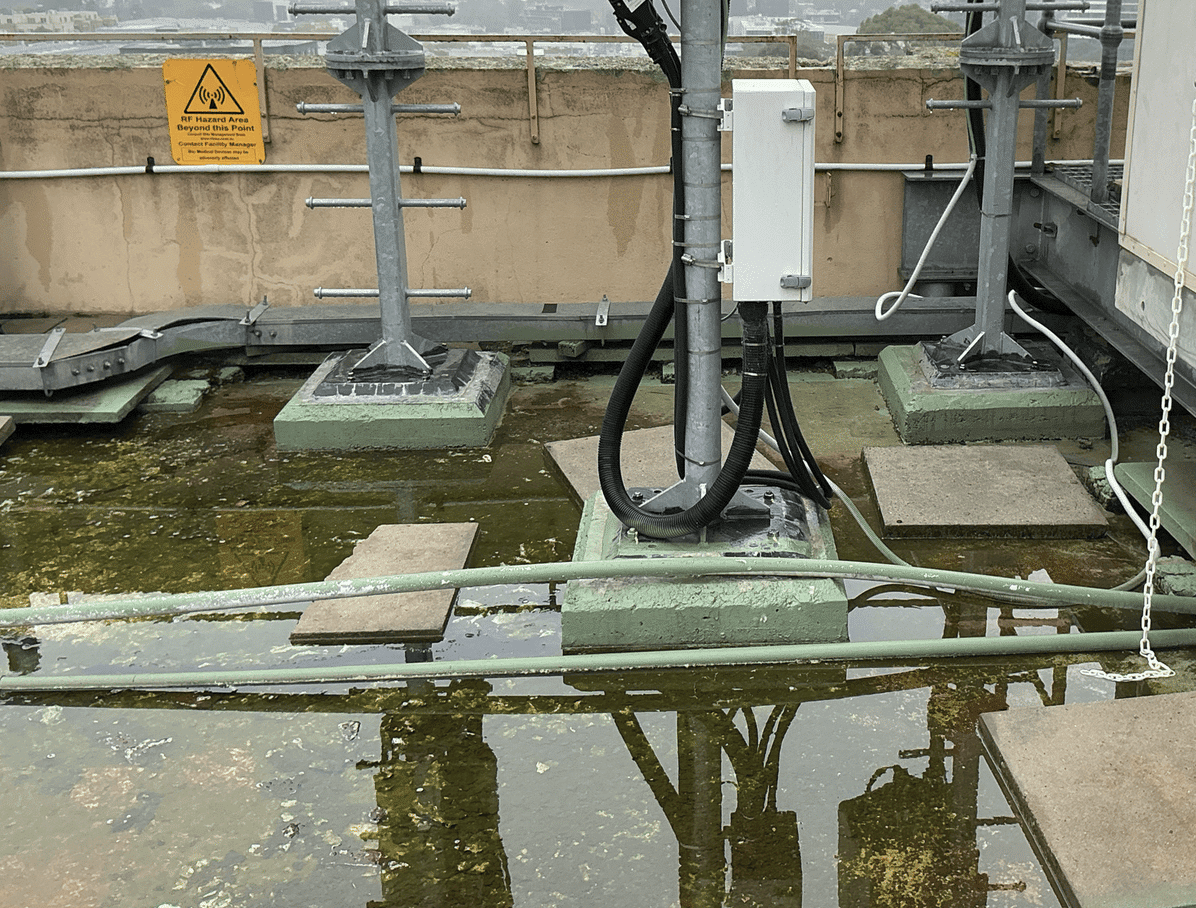
Don’t start with the repair. Start with the investigation.
When water starts appearing inside a commercial building, apartment building or common area, the immediate instinct is often to find someone to fix it.
But waterproofing defects are rarely solved effectively by simply treating the visible symptoms.
The first question should be:
Where is the water coming from, and what evidence supports that conclusion?
Step 1: Document the problem
Before any destructive work or repairs begin, document what is happening.
Record:
• where water is appearing
• when it occurs
• whether it follows rain or cleaning
• visible staining
• cracking
• blistering
• ponding
• failed sealants
• damaged finishes
• previous repair areas
• photographs and dates
This creates a baseline for the investigation.
Step 2: Understand the building and its history
Existing buildings often have layers of repairs, modifications and different waterproofing systems.
Review available information such as:
• original drawings
• waterproofing specifications
• previous inspection reports
• maintenance records
• repair invoices
• warranties
• photographs
• previous water ingress complaints
• previous testing results
The history of the building can provide important clues about why a problem continues to occur.
Step 3: Identify potential water pathways
Water does not always enter where the damage becomes visible.
Water can travel through:
• joints
• cracks
• penetrations
• construction interfaces
• drainage systems
• failed sealants
• membranes
• substrate defects
• junctions between different materials
This is why the location of a water stain should not automatically be treated as the location of the waterproofing failure.
Step 4: Determine whether testing is required
Testing should answer a specific question.
Depending on the situation, an investigation may involve testing of:
• membrane integrity
• adhesion
• moisture
• relative humidity
• substrate condition
• falls and drainage
• sealant performance
• flood resistance
• electrical leak detection
• other relevant waterproofing characteristics
The correct testing method depends on the building, waterproofing system and suspected failure mechanism.
Step 5: Diagnose the cause
The objective is not simply to produce a list of defects.
The objective is to establish the likely cause of the water ingress based on evidence.
A report saying “Waterproofing is defective” is very different from a report explaining “The observed water ingress is consistent with a failure at the identified junction, supported by inspection and testing.”
The second provides a basis for decision-making.
Step 6: Develop the remedial scope
Once the cause is understood, the remedial strategy can be developed.
The scope should clearly establish:
• areas requiring remediation
• preparation requirements
• substrate requirements
• waterproofing requirements
• detailing
• interfaces
• testing requirements
• quality-control requirements
• completion verification
This helps prevent the remedial contractor from having to determine the entire technical solution during construction.
Step 7: Verify the completed work
Remediation should not necessarily end when the contractor says the work is complete.
Verification can establish whether the required work has actually been completed and whether the relevant performance criteria have been addressed.
The correct sequence
A robust remedial waterproofing process is:
Investigate → Test → Diagnose → Specify → Remediate → Verify
Not:
Leak → Repair → Leak again → Repair again
Takeaway
A robust remedial waterproofing process is:
A waterproofing failure is not simply a maintenance problem.
It is an investigation problem first.
Before committing to a remedial solution, establish what failed, why it failed and what evidence supports the proposed solution.
✉️ advice@waterproofingintegrity.com.au
🌐 waterproofingintegrity.com.au
📍 Our offices across Australia: Sydney | Newcastle | Melbourne | Brisbane
How We’re Different From a Waterproofing Contractor
| Waterproofing Integrity | Waterproofing Contractor | |
|---|---|---|
| Diagnoses the cause | Independent testing before any recommendation | Often assumes, based on the job being priced |
| Recommends the fix | Specifies what’s correct, regardless of who installs it | Recommends what they install |
| Financial interest in the outcome | Advisory fee only | Paid to perform the work |
| Verifies the finished work | Independently tests and reports on the completed work | Self-verifies their own work |
Comments (0)