
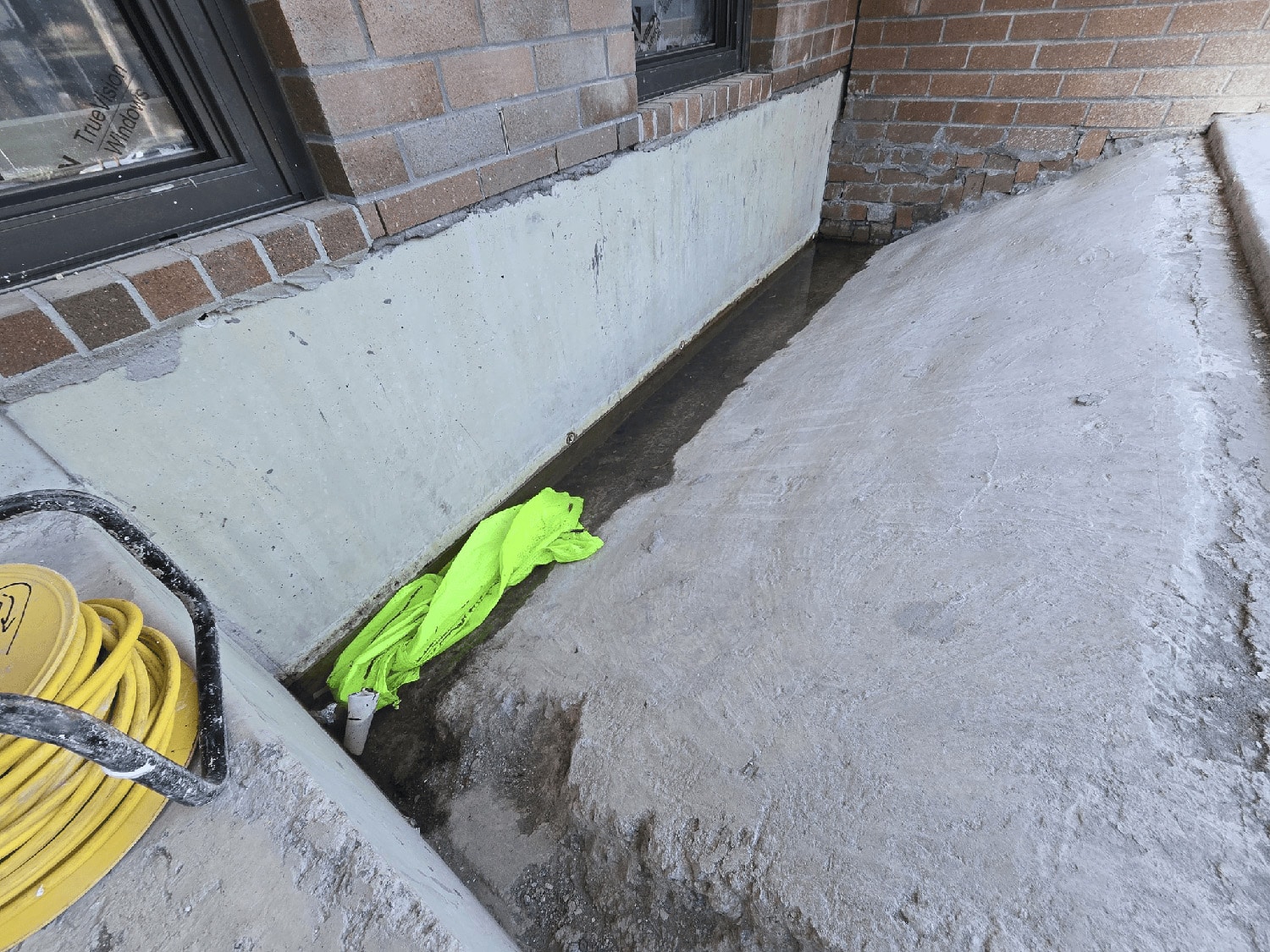
A leak tells you that water is getting somewhere it shouldn’t. It doesn’t automatically tell you why.
One of the biggest misconceptions in building maintenance is:
Water ingress = failed waterproofing membrane.
Sometimes it is.
But sometimes the membrane is not the primary cause.
What else can cause water ingress?
Potential causes include:
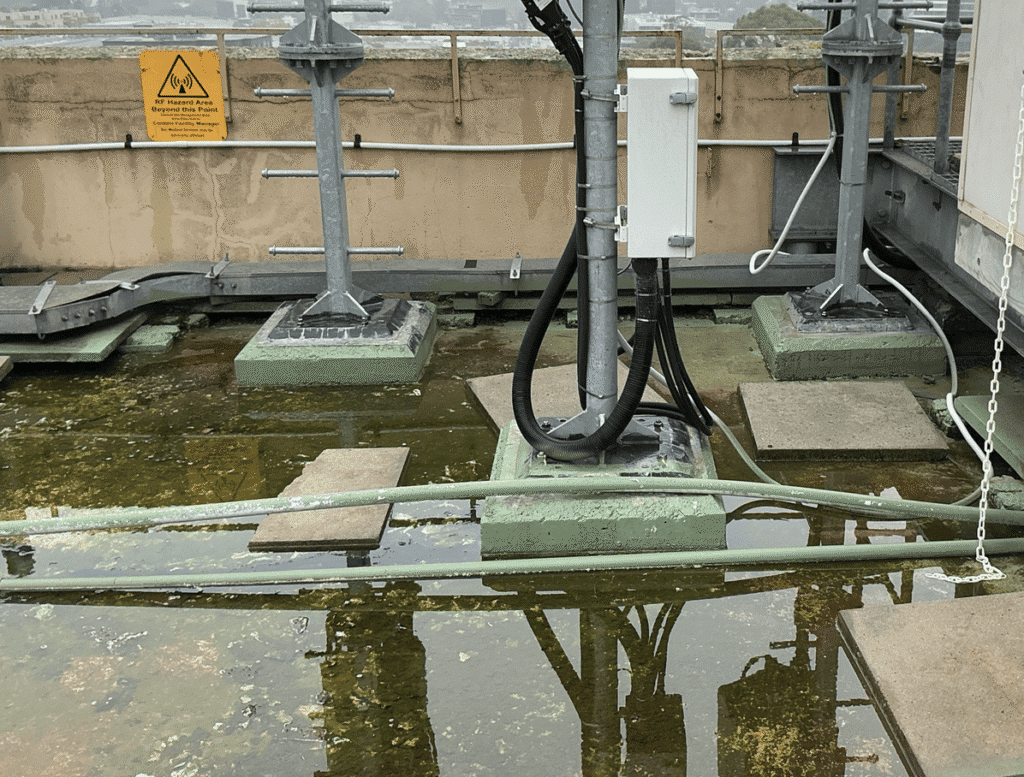
Drainage: Blocked or inadequate drainage can cause water to accumulate where it was not intended to.
Falls: Insufficient falls can result in ponding and prolonged exposure to water.
Sealants: Failed or deteriorated sealants at joints, interfaces and penetrations can allow water entry.
Cracks and movement: Movement in the substrate or structure can create pathways for water.
Penetrations: Services, fixings and other penetrations can compromise waterproofing systems.
Junctions: Transitions between different materials or construction elements can become vulnerable points.
Building interfaces: Water may enter through one component and travel before becoming visible somewhere else.
Why the visible leak can be misleading
Imagine water appearing on the ceiling of a commercial building.
The visible damage may be several metres away from the actual entry point.
If the damaged area is repaired without identifying the pathway, the leak may simply appear somewhere else.
This is why water ingress investigation should focus on cause and pathway, not just symptoms.
What should a waterproofing investigation establish?
A proper investigation should consider:
• the location of the visible damage
• surrounding building elements
• drainage
• falls
• joints and interfaces
• penetrations
• waterproofing systems
• substrate conditions
• previous repairs
• environmental conditions
• appropriate testingThe objective is to build an evidence-based understanding of the problem.
Why this matters to commercial asset owners
Repeated waterproofing repairs can create significant disruption.
They can also result in:
• repeated contractor costs
• tenant disruption
• damaged finishes
• operational interruptions
• repeated investigations
• uncertainty about the underlying building condition
For asset owners, the more useful question is therefore not: “Who can fix this leak?”
It is: “What is causing this leak, and what evidence do we have?”
Takeaway
Water ingress is a symptom.
The source needs to be investigated.
Before replacing a membrane, make sure the membrane is actually the problem.
✉️ advice@waterproofingintegrity.com.au
🌐 waterproofingintegrity.com.au
📍 Our offices across Australia: Sydney | Newcastle | Melbourne | Brisbane
How We’re Different From a Waterproofing Contractor
| Waterproofing Integrity | Waterproofing Contractor | |
|---|---|---|
| Diagnoses the cause | Independent testing before any recommendation | Often assumes, based on the job being priced |
| Recommends the fix | Specifies what’s correct, regardless of who installs it | Recommends what they install |
| Financial interest in the outcome | Advisory fee only | Paid to perform the work |
| Verifies the finished work | Independently tests and reports on the completed work | Self-verifies their own work |
Comments (0)